Mixed Signals for GBP: Housing Slows, But UK Consumers Keep Borrowing
The latest economic data from the United Kingdom presents a nuanced picture of household financial health, offering both signs of a cooling economy and persistent consumer resilience. Recent figures released by the Bank of England revealed a significant slowdown in mortgage approvals, juxtaposed with a steady, albeit below-average, growth in consumer credit. For forex traders, these indicators are crucial for understanding the Bank of England's future monetary policy path and its potential impact on the British Pound (GBP).
Decoding the Latest UK Economic Data May saw a notable contraction in UK mortgage approval numbers, falling sharply to 56,205 from a revised 66,034 in April, and significantly missing market expectations of 62,900. This marks a substantial decline in housing market activity. Concurrently, net borrowing of mortgage debt by individuals decreased to £2.9 billion in May, down from £4.4 billion in April, registering its lowest level in over a year. This trend suggests that higher interest rates are actively dampening demand in the property sector.
In contrast, consumer credit borrowing remained largely stable at £1.7 billion in May. While this figure sits below the previous six-month average, the annual growth rate for all consumer credit edged higher to 8.9% from 8.7%. A deeper dive reveals that credit card borrowing saw its annual growth rate accelerate to 12.1% from 11.8%. This suggests that despite a tougher economic environment, UK consumers are maintaining spending, potentially by increasing their reliance on credit.
Trader's Takeaway: Implications for Bank of England Policy These mixed signals create a challenging environment for the Bank of England (BoE) as it navigates its fight against inflation. The sharp drop in mortgage approvals and housing debt borrowing clearly indicates that the BoE's aggressive rate hike cycle is having its intended effect on the housing market, a key component of the UK economy. A slowing housing sector could be interpreted as a dovish signal, potentially reducing the urgency for further substantial rate increases.
However, the sustained growth in consumer credit, particularly on credit cards, presents a hawkish counterpoint. Persistent consumer spending, even if fueled by debt, can contribute to demand-side inflation pressures, making it harder for the BoE to bring inflation back to its 2% target. Traders will be closely watching how the BoE prioritizes these conflicting data points: whether it leans towards concerns about economic slowdown or remains focused on tackling sticky inflation.
Currency Impact and Market Outlook The primary currency pairs affected by this data are those involving the British Pound, most notably GBP/USD and EUR/GBP. A perception that the BoE might become less hawkish due to housing market weakness could weigh on GBP, potentially seeing it retreat against major counterparts. Conversely, if the market interprets strong consumer credit as a sign of persistent inflationary pressures, the Pound might find some support on expectations of continued rate hikes.
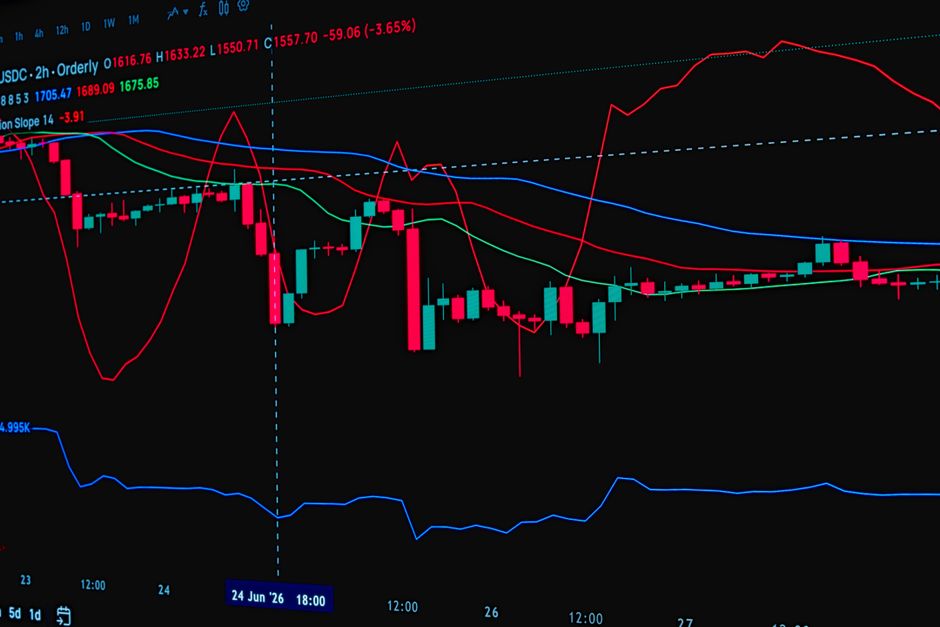
Currently, GBP/USD remains sensitive to shifts in BoE sentiment and broader risk appetite. Key levels to watch include recent support zones, as a decisive break could signal further downside. For EUR/GBP, a strengthening Pound would push the pair lower, while GBP weakness would see it climb. Traders should monitor upcoming UK inflation reports, employment figures, and crucially, any statements from BoE officials for clearer guidance on the central bank's policy trajectory. The path for GBP will likely remain volatile as the market digests these competing economic forces.
Conclusion The latest UK economic data paints a complex picture for the British economy and its currency. While the housing market shows clear signs of cooling, consumer resilience through credit borrowing adds a layer of uncertainty to the Bank of England's monetary policy path. Forex traders should prepare for potential volatility in GBP pairs as the market continues to weigh the implications of these mixed signals on future interest rate decisions.