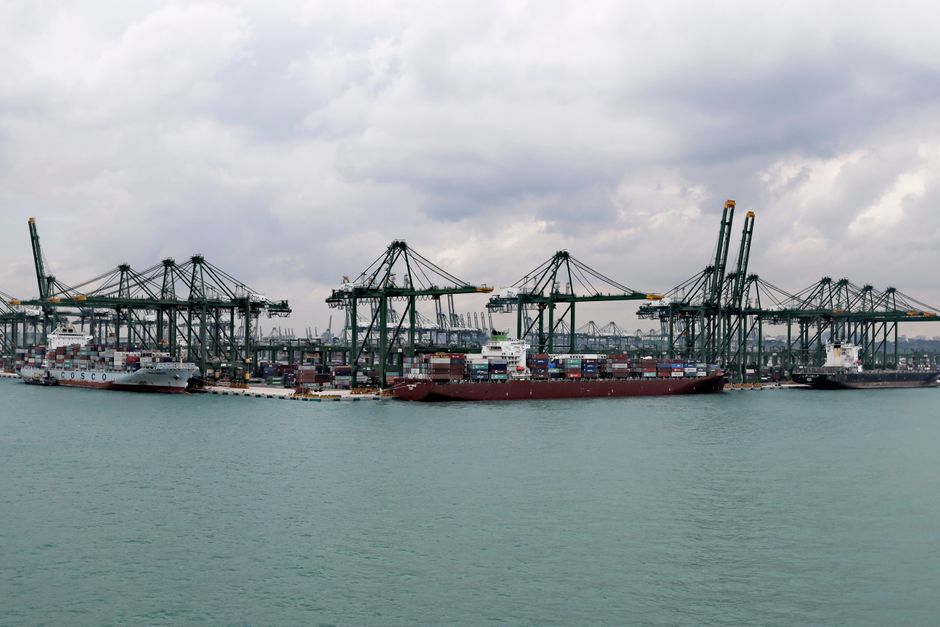
Singapore Exports Surge: What It Means for Forex Markets
Singapore's economy continues to demonstrate remarkable resilience, with its Non-Oil Domestic Exports (NODX) recording robust growth for the fourth consecutive month in July. This latest print, while slightly below some market expectations, extends an impressive streak of export performance that underscores a strengthening regional trade landscape. Critically, this growth isn't concentrated in a single sector or market; instead, it shows broad-based expansion across a majority of Singapore's top trading partners. This widespread strength reinforces the view that the underlying drivers of Singapore's export engine are structural, rather than merely a transient surge, providing a crucial data point for analysts assessing broader Asian economic health.
Why This Matters for Forex Traders
For forex traders, Singapore's export trajectory serves as a vital barometer for overall Asian economic momentum. As a highly open economy and a significant regional trade hub, strong performance here often presages positive trends across other export-oriented Asian nations. Sustained growth in NODX signals robust global demand for goods, which can enhance investor confidence in regional assets. This, in turn, can influence capital flows, potentially strengthening local currencies and those of key trading partners. Traders often interpret such data as an indicator of global risk appetite; when Asian trade thrives, it typically bodes well for risk-on currencies and can weigh on traditional safe-havens.
Key Currency Pairs Affected
Singapore's robust export data has direct and indirect implications for several currency pairs:
USD/SGD
The Singapore Dollar (SGD) is directly impacted. Strong export figures typically lend support to the SGD, reflecting improved economic fundamentals and potential for sustained growth. This can lead to downward pressure on USD/SGD, or at least limit its upside potential, as the market prices in a more optimistic outlook for the city-state's economy. The Monetary Authority of Singapore (MAS) closely monitors economic indicators like trade, and consistent strength could influence future policy considerations.
AUD/USD & NZD/USD
As commodity-linked and risk-sensitive currencies, the Australian Dollar (AUD) and New Zealand Dollar (NZD) often act as proxies for broader Asian economic health. When a key Asian economy like Singapore demonstrates strong trade performance, it can bolster sentiment towards these currencies. Improved regional demand for exports from Australia and New Zealand translates into a more positive outlook for their respective economies, potentially driving AUD/USD and NZD/USD higher.
USD/JPY
The Japanese Yen (JPY) typically functions as a safe-haven currency. An environment of robust global trade and improving risk appetite, as suggested by Singapore's export strength, tends to reduce demand for safe-haven assets. Consequently, this could contribute to a weakening of the JPY against other major currencies, potentially seeing USD/JPY push higher as investors seek riskier assets with better returns.
Technical Outlook & Trading Perspective
The sustained positive momentum in Singapore's exports provides a fundamental tailwind for the Singapore Dollar and could contribute to a generally risk-on sentiment in the broader forex market. Traders should monitor USD/SGD for potential downside continuation if the positive data flow persists, looking at key support levels established during recent periods of SGD strength. For AUD/USD and NZD/USD, sustained positive Asian economic signals could help these pairs challenge overhead resistance levels. Conversely, USD/JPY may find support as risk-on flows diminish safe-haven demand. Technical analysis, focusing on trend lines, moving averages, and key psychological levels, will be crucial for confirming these directional biases and identifying entry/exit points. Continued vigilance on upcoming regional economic data will be paramount for confirming these trends.